Last Updated: 26 October 2026
Quick Summary
A spray finish bonds to the surface as one continuous coating with no seams or visible edges, while vinyl wrapping applies an adhesive film that can lift or peel at its edges. That makes spraying the stronger choice for shaped kitchen doors, uPVC frames and conservatories, where it also resists chipping and cleans with a damp cloth.
- Sprayed coatings flow onto the substrate and cure into a single continuous skin with no overlaps.
- Vinyl film has to be cut and joined, and those joins show on anything other than a flat surface.
- A cured spray finish cleans with a damp cloth and mild detergent, with no special products needed.
- Spraying happens on site with surfaces masked, so panels stay in place and film offcuts are avoided.
- Wrapping still suits rented properties where reversibility matters or a single flat panel.
Table of Contents
- Spray Finish vs Vinyl Wrapping: How the Two Methods Differ
- Side-by-Side Comparison: Spray Finish and Vinyl Wrapping
- Benefit 1: A Seamless Finish With No Visible Edges
- Benefit 2: The Durability of Professional Spray Finishes
- Benefit 3: How uPVC Spray Painting Cost Compares to Wrapping
- Benefit 4: How to Maintain Spray Painted uPVC and Kitchen Units
- Benefit 5: Less Disruption and No Waste Going to Landfill
- Where Vinyl Wrapping Still Makes Sense
- Frequently Asked Questions
Spray Finish vs Vinyl Wrapping: How the Two Methods Differ
If you are weighing up a refresh for tired kitchen units or weathered uPVC, the choice usually comes down to two routes: a sprayed coating or a vinyl wrap. At Astral Coatings Ltd., we have spent years working with spray finishing across kitchens, windows, doors and conservatories. The short answer is that a spray finish bonds to the surface as a continuous coating, while vinyl wrapping applies a film over it. That single difference drives almost everything else, from how the edges look to how long the finish lasts.
Below, we break down the top 5 benefits of choosing spray finish over vinyl wrapping, with an honest look at where wrapping still has a place.
What a sprayed coating actually is
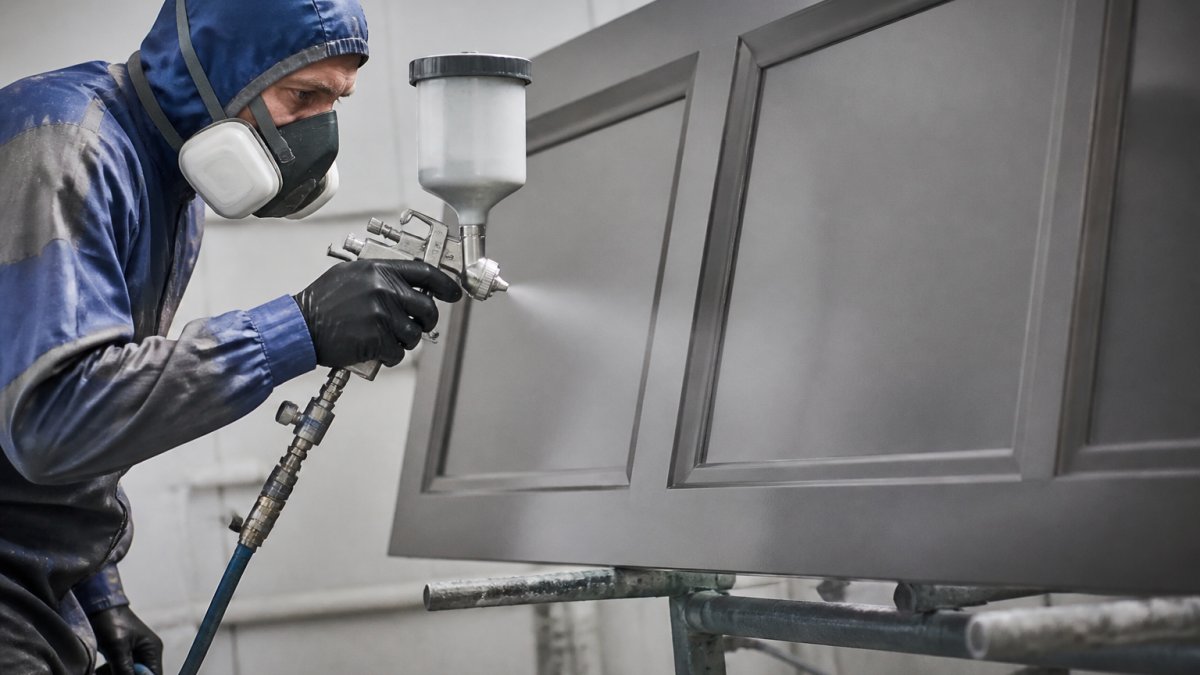
A sprayed coating is a liquid finish applied in thin, even layers until it builds to the right thickness. The surface is cleaned, any damage is filled and sanded, and the coating is sprayed on in controlled passes. Because the coating flows onto the substrate rather than sitting on top of it, it cures into a single continuous skin. If you want to see how this applies to frames and panels in practice, our uPVC spraying service shows the surfaces we work with.
The result is a finish with no seams, no overlaps and no cut edges to catch the eye.
Where vinyl wrap fits
Vinyl wrapping uses a printed or coloured adhesive film pressed onto a flat surface. It suits simple, flat panels well and can be removed later, which is why some homeowners like the reversibility. The catch is that film has edges. On a flat door, those edges are easy to hide. On moulded kitchen doors, curved frames or conservatory profiles, they are not. Dirt and moisture can also work their way under a lifted edge over time.
Side-by-Side Comparison: Spray Finish and Vinyl Wrapping
Here is how the two methods compare across the factors that matter most for a home refresh.
| Factor | Spray Finish | Vinyl Wrapping |
|---|---|---|
| Edges and seams | None, continuous coating | Visible edges on shaped surfaces |
| Durability | Bonds to surface, resists chipping | Can lift or peel at edges |
| Reversibility | Permanent until resprayed | Removable |
| Best for | Kitchens, uPVC, conservatories | Flat panels, short-term changes |
| Disruption | On-site spraying, surfaces masked | Panels often removed to apply |
| Waste | Minimal overspray, no film offcuts | Film offcuts to dispose of |
The pattern is clear: where surfaces are shaped, textured or exposed to weather, spraying pulls ahead. Where you want a flat panel and might change your mind later, wrapping has a case.
Benefit 1: A Seamless Finish With No Visible Edges
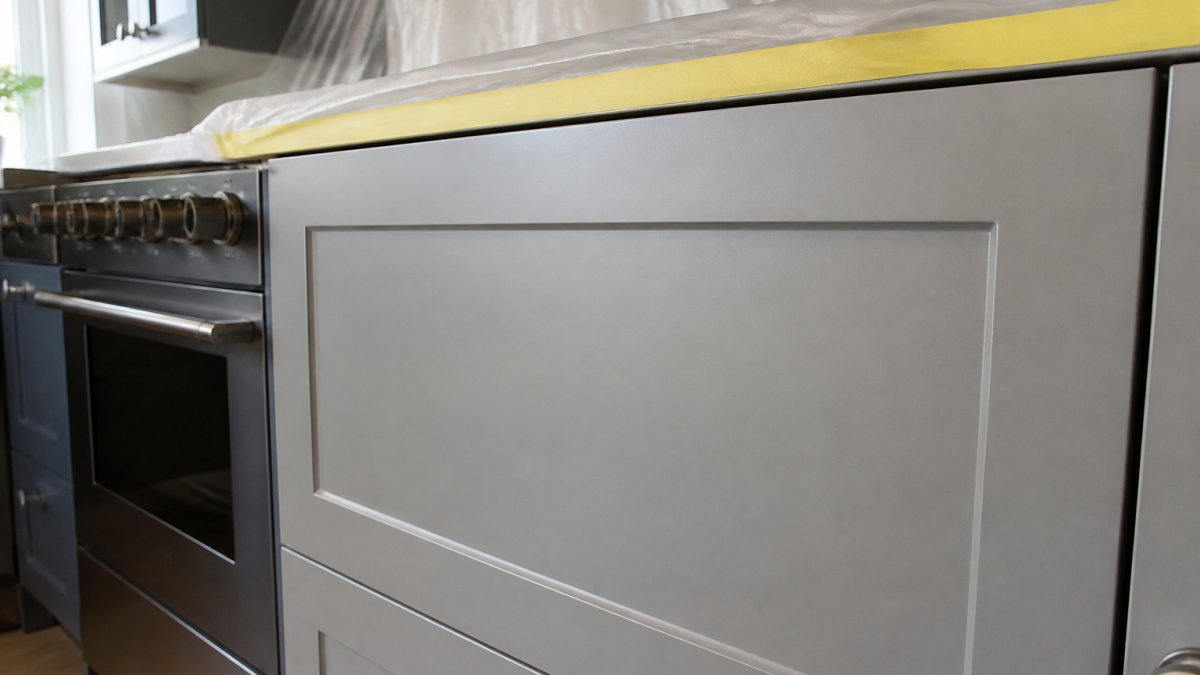
This is the benefit people notice first. A spray finish wraps around mouldings, curves and profiles as one continuous coating, so there is no line where one panel ends and another begins. Vinyl film, by contrast, has to be cut and joined, and those joins show on anything other than a flat surface.
For kitchen doors with any relief or beading, the difference is stark. A common mistake is judging a wrap by how it looks on a flat sample door, then being surprised when the edges catch on the shaped doors in the actual kitchen. If you want to see the process behind that seamless result, our step-by-step uPVC spraying guide walks through how the coating is built up.
Benefit 2: The Durability of Professional Spray Finishes
A properly applied spray coating is built to stay put. The durability of professional spray finishes comes from surface preparation and coating thickness: the surface is keyed, primed where needed, and sprayed to an even film that cures hard. That is why it resists chipping and weathering far better than a film that relies on its adhesive to hold. You can check the warranty and aftercare terms behind the finish.
We follow a meticulous 3-step spraying process developed over 30 years in interior and exterior decorating, and we trained at the Dulux Academy and Llewellyns of Brighton. That background matters because most durability failures trace back to skipped prep, not the coating itself.
Benefit 3: How uPVC Spray Painting Cost Compares to Wrapping
On cost, spraying and wrapping land closer than most people expect, but they spend your money differently. Wrapping carries the material cost of the film plus the labour to remove panels, apply the film and refit. Spraying carries the labour of preparation and masking, but the coating itself is often the smaller line. Where wrapping wins is on a single flat panel; where spraying wins is on a whole room or a full set of windows, because the prep is shared across all the surfaces.
A practical way to judge uPVC spray painting cost is to compare it against replacement, not just against a wrap. Respraying existing frames keeps the frames you already have, so you avoid the cost of new units and the waste of ripping out sound ones. For a firm figure, ask for a quote based on your actual surface area.
Benefit 4: How to Maintain Spray Painted uPVC and Kitchen Units
Maintenance is where spraying quietly saves you time. A cured spray finish cleans with a damp cloth and a mild detergent, with no special products and no need to avoid the edges. Knowing how to maintain spray painted uPVC comes down to three habits:
- Wipe frames and doors with warm soapy water every few months
- Avoid abrasive pads and strong solvents that dull the coating
- Touch in any scuffs early, before they spread
Vinyl needs more care. Edges must be kept clean and pressed down, and a lifted corner is hard to fix invisibly. If you are planning a kitchen refresh, you can browse the kitchen spraying service to see how the finish is applied around worktops and appliances.
Benefit 5: Less Disruption and No Waste Going to Landfill
Spraying happens on site, with surrounding surfaces masked and protected, so you are not living around a stripped-out room for weeks. There is no pile of old doors waiting to be replaced and no film offcuts to bin. For anyone working from home, that matters: a common worry is weeks of noise and dust, and spraying avoids the worst of it because the surfaces stay in place.
Wrapping, by contrast, often means removing panels to apply the film cleanly, then refitting them. Every removed panel is a chance for damage, and every offcut of film is waste. Spraying keeps the disruption contained and the waste minimal.
Where Vinyl Wrapping Still Makes Sense
Wrapping is not the wrong choice everywhere. It earns its place when reversibility matters more than a seamless finish, such as a rented property where you need to restore the original look, or a single flat panel you might want to change again. It also suits a quick, low-cost cosmetic change on a flat surface with no shaping. If you are still deciding, you can visualise colour options before committing.
For most kitchens, uPVC frames and conservatories, though, the seamless finish and durability of spraying tip the balance.
Frequently Asked Questions
Is spray painting uPVC more durable than vinyl wrapping?
A professionally applied spray finish bonds to the frame and cures into a hard coating, so it resists chipping and peeling far better than a vinyl film. Wrapping relies on an adhesive layer that can lift at edges, corners and around handles, particularly on south-facing frames that take constant sun. A spray finish also covers complex profiles and moulded details that a flat film cannot follow without seams. The durability of professional spray finishes depends on correct preparation and coating thickness, which is why the three-step process matters.
How long does a professional spray finish last compared to vinyl?
A well-applied spray finish on kitchen units or uPVC typically holds its colour and surface for many years before any refresh is needed, and it can be re-coated rather than stripped. Vinyl wrap has a shorter working life because the adhesive degrades and the film can shrink, bubble or peel at the edges. Lifespan for either depends on surface preparation, sun exposure and how the surface is cleaned. Ask any provider how they prepare the substrate, because that step decides how long the finish lasts.
Is a spray finish cheaper than replacing kitchen cabinets?
Spraying existing doors and frames usually costs less than a full replacement because you keep the carcasses, worktops and appliances in place. The exact uPVC spray painting cost or kitchen spraying quote depends on the number of doors, drawers, frames and the condition of the surface, so ask for a written quote rather than a headline figure. Compared with ripping out and refitting a kitchen, spraying also avoids skip hire, tiling repairs and weeks of trades on site.
Can you spray paint over existing vinyl wraps?
It is not advisable. Paint needs a sound, clean substrate to bond to, and a vinyl film is a flexible layer that can shift, lift or shrink underneath. The coating may crack or flake as the film moves. The reliable route is to remove the old wrap, prepare the surface properly and then spray. A professional assessment will confirm whether the substrate underneath is sound enough to coat, or whether any areas need repair first.
Choosing between a sprayed coating and a wrap comes down to how much you value a seamless, long-lasting finish over the ability to peel it off later. At Astral Coatings Ltd., we bring 30 years of decorating experience, a meticulous 3-step spraying process, and durable weatherproof finishes to every kitchen, window and conservatory we refresh. Get started with Astral Coatings Ltd. and give your home a finish that looks factory-fresh for years, not months.
