Table of Contents
- Why Modernising Kitchen Units Mattrs
- How to Prepare Kitchen Cabinets for Painting
- Kitchen Cabinet Paint Colours That Modernise Your Space
- Kitchen Cabinet Spraying: The Professional Method
- Cost to Spray Kitchen Cabinets: What Affects Your Investment
- Common Mistakes to Avoid When Modernising Kitchen Units
- Frequently Asked Questions
Last Updated: October 6, 2026
Why Modernising Kitchen Units Mattrs
Dated kitchen cabinets drain your home’s appeal. They make the whole room feel tired, even when everything else is new. Learning how to modernise dated kitchen units doesn’t require a full renovation or tens of thousands of pounds. Modern spray finishing transforms tired units into contemporary focal points in just days, not weeks.
At Astral Coatings Ltd., we understand the desire to refresh kitchens across Sussex. Homeowners often assume they need to replace cabinets entirely. The truth is simpler: professional spray finishing delivers a durable, high-quality result.
Modernising your kitchen units also protects your investment. A quality spray coating resists moisture, heat, and daily wear. This matters in kitchens, where steam, spills, and temperature swings test any finish constantly.
The process itself causes minimal disruption. Your kitchen stays functional throughout.
How to Prepare Kitchen Cabinets for Painting
Preparation determines everything. Rushed prep leads to peeling, chipping, and a finish that disappoints within months. Proper preparation takes time, but it’s what separates professional results from DIY disasters.
Clearing and Protecting Your Space
Empty your kitchen completely. Remove every item from inside and on top of cabinets. Doors, shelves, and hardware all come off. This isn’t optional, it’s essential.
Protect everything else in the room:
- Cover worktops with heavy plastic sheeting, taped down securely
- Drape appliances, flooring, and walls with dust sheets
- Remove or tape off light switches and sockets
- Close doors to adjacent rooms to contain dust and fumes
This step takes several hours. It feels tedious. It’s the difference between a professional-looking finish and damaged appliances.
Cleaning and Degreasing Surfaces
Kitchen cabinets accumulate grease, dust, and cooking residue. Paint doesn’t stick to dirt. You must clean thoroughly.
Use a degreasing cleaner on all surfaces. Work methodically across every door, frame, and shelf. Pay special attention to areas near the cooker, where grease buildup is heaviest.
Rinse everything with clean water. Let it dry completely, at least 24 hours in normal conditions. Moisture trapped under paint causes adhesion problems and eventual failure.
Sanding and Surface Assessment
Light sanding removes the existing finish and creates a surface paint can grip. Use 120-150 grit sandpaper for most kitchen cabinets. Sand by hand or with an orbital sander, moving with the grain where possible.
The goal isn’t to strip bare wood. You’re creating a slightly roughened surface. This takes patience but pays dividends in coating durability.
Inspect closely as you sand. Look for:
- Damage, dents, or deep scratches
- Areas where the existing finish is peeling
- Warped or swollen sections (common in older kitchens)
- Loose joints or hardware attachment points
Document any damage. Some issues need filler or wood repair before spraying proceeds.
Kitchen Cabinet Paint Colours That Modernise Your Space
Colour choice defines the entire look. Modern kitchens favour clean, contemporary palettes. The right colour makes dated units feel current and intentional.
Neutral tones remain the safest choice. Soft greys, warm whites, and muted blacks create timeless, sophisticated backdrops. These work with any worktop, splashback, or appliance colour you choose.
Deep, bold colours work well in kitchens with good natural light. Navy, charcoal, or forest green cabinets feel contemporary and upmarket. Pair them with brass or chrome hardware for maximum impact.
Warm tones like sage, taupe, or soft terracotta suit traditional homes. They feel modern without clashing with period features.
Avoid bright, saturated colours. They date quickly and feel less professional than muted, sophisticated alternatives. Test your chosen colour on a sample cabinet door first. See how it looks in morning light, afternoon light, and evening artificial light. Colour perception shifts dramatically depending on lighting conditions.
Kitchen Cabinet Spraying: The Professional Method
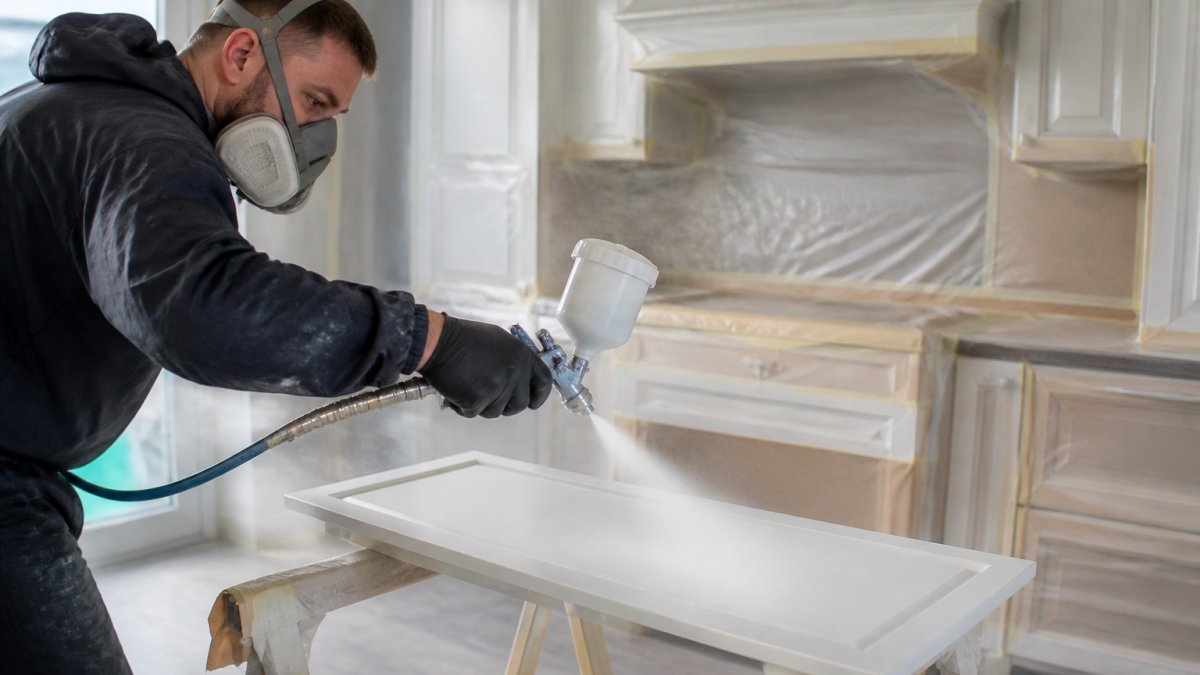
Spray finishing delivers results brush application cannot match. The finish is thinner and more even. Professional spraying applies multiple thin coats rather than fewer thick ones, which prevents drips, runs, and uneven coverage.
The Three-Step Spraying Process
Astral Coatings Ltd. uses a meticulous three-step process that ensures optimal coating thickness and durability.
Step 1: Primer Application
A quality primer bonds to the prepared surface and provides a base for topcoats. Primer fills minor imperfections and creates uniform colour coverage. This step is essential for long-term adhesion.
Step 2: First Topcoat
The first topcoat builds colour and protection. Sprayers apply this coat in thin, even passes, allowing proper drying time between applications. This prevents the finish from becoming too thick, which causes sagging and uneven coverage.
Step 3: Second Topcoat and Protection
The final coat provides durability and sheen. The finish hardens fully over several days, developing its final hardness and resistance to moisture and heat.
Why Spraying Outperforms Brush Application
Spray application atomises paint into a fine mist that settles evenly across every surface.
Spraying also applies thinner coats. Thinner coats dry faster and more uniformly. This prevents the soft, tacky finish that sometimes results from heavy brush application.
The finish from professional spraying feels smooth and looks factory-made. The sheen is consistent across every surface.
Spray finishing also reaches areas brushes miss. Inside corners, panel edges, and decorative details receive complete, even coverage.
Cost to Spray Kitchen Cabinets: What Affects Your Investment
Several factors influence the total cost of modernising your kitchen units through spray finishing. Understanding these helps you plan realistically.
Cabinet quantity and size matter most. Larger kitchens with more doors and panels cost more than compact galley kitchens.
Existing finish condition affects preparation time. Cabinets in poor condition, with peeling paint, water damage, or heavy grease buildup, require more intensive prep work.
Colour choice can influence cost slightly. Complex colours or special finishes cost more than standard options.
Turnaround time affects scheduling. Rush jobs may incur additional charges.
Hardware replacement adds to total investment. New handles, hinges, or knobs modernise the look further.
Rather than estimating costs yourself, request a quote from Astral Coatings Ltd. Every kitchen is unique. A professional assessment identifies specific factors affecting your project and provides accurate pricing for your situation. Contact us on WhatsApp for a personalised quote based on your kitchen’s actual dimensions and condition.
Common Mistakes to Avoid When Modernising Kitchen Units
Most DIY attempts at how to modernise dated kitchen units fail because homeowners skip or rush preparation. You cannot spray over grease and dirt. The finish will peel within months.
Choosing the wrong colour is another common error. Test colours in your actual kitchen lighting before committing. Paint samples on cabinet doors and observe them throughout the day.
Inadequate ventilation during spraying creates problems. Fumes accumulate, and moisture doesn’t escape properly. Open windows, use fans, and ensure air circulation during and after application.
Applying coats too thickly causes sagging, runs, and uneven drying. Multiple thin coats always outperform fewer thick coats.
Touching the finish too soon ruins the result. Spray finishes require full curing time, typically 7-10 days before normal kitchen use. Resist the temptation to close cabinet doors or place items inside until the coating fully hardens.
Using low-quality paint or equipment produces disappointing results. Professional-grade materials and equipment make a measurable difference in durability and appearance.
Attempting to spray without proper masking and protection damages surrounding surfaces. Plastic sheeting, tape, and careful setup prevent costly mistakes.
Modernising dated kitchen units transforms your home. Professional spray finishing from Astral Coatings Ltd. delivers durable, contemporary results. Our three-step spraying process ensures optimal coating thickness and protection, with careful surface preparation and meticulous attention to detail. The finish resists moisture, heat, and daily wear. Get started with Astral Coatings Ltd. and discover how spray finishing can refresh your kitchen.
Frequently Asked Questions
How long does a professional spray finish last on kitchen cabinets?
The durability of a professional spray finish depends on the quality of surface preparation, the coating system used, and how well you maintain the cabinets. The three-step spraying process, which includes primer, base coat, and protective topcoat, ensures optimal coating thickness that resists chipping and peeling. Regular cleaning with appropriate products keeps the finish in top condition.
Can you modernise kitchen units without removing doors and drawers?
Yes. Professional spray finishing can be applied on-site with doors and drawer fronts in place, though removing them allows for superior coverage and faster drying. If doors remain attached, masking and protection become more detailed. Most professionals recommend removal for the best finish quality and to protect surrounding surfaces like worktops and appliances. The choice depends on your space constraints and how much disruption you can tolerate during the work.
What kitchen cabinet paint colours work best for modernising dated units?
Neutral tones like soft greys, warm whites, and muted greens create a contemporary look whilst remaining timeless. Deeper shades such as navy or charcoal add sophistication and hide marks well. Matt and satin finishes feel more modern than gloss. Consider your kitchen’s lighting and existing worktops, lighter colours open up small spaces, whilst darker colours suit larger kitchens with good natural light. Professional advice ensures your chosen colour complements your overall kitchen design.
How much disruption will kitchen cabinet spraying cause in my home?
Professional spray finishing causes minimal disruption. You’ll experience some noise from masking preparation and spray application, plus temporary kitchen access restrictions. Dust and fumes are controlled through proper ventilation and masking. Most daily routines can continue with minor adjustments. Professional teams protect your worktops, appliances, and flooring throughout the process.