
Table of Contents
- How Long Kitchen Spray Finishes Last
- Factors That Affect Kitchen Spray Finish Durability
- Benefits of Professional Kitchen Cabinet Spraying
- Maintenance Tips to Extend Your Spray Finish Lifespan
- How to Clean Spray Painted Kitchen Cabinets
- Understanding Kitchen Cabinet Spraying Cost and Value
- Signs Your Kitchen Spray Finish Needs Refreshing
- Frequently Asked Questions
Last Updated: September 29, 2026
How Long Kitchen Spray Finishes Last
Kitchen spray finishes typically last between 7 and 10 years with proper care and maintenance, though this timeline varies significantly based on application quality and environmental factors. A professionally applied kitchen spray finish can maintain its appearance and durability well beyond a decade if the underlying preparation work meets industry standards and the kitchen environment remains reasonably controlled.
The longevity of kitchen spray finishes depends far more on how they’re applied than on the paint itself. Homeowners often underestimate the impact of surface preparation; a rushed sanding job or inadequate primer application can cut the finish lifespan in half, regardless of the coating quality. The difference between a finish that lasts five years and one that lasts twelve often comes down to decisions made before the spray gun is even picked up.
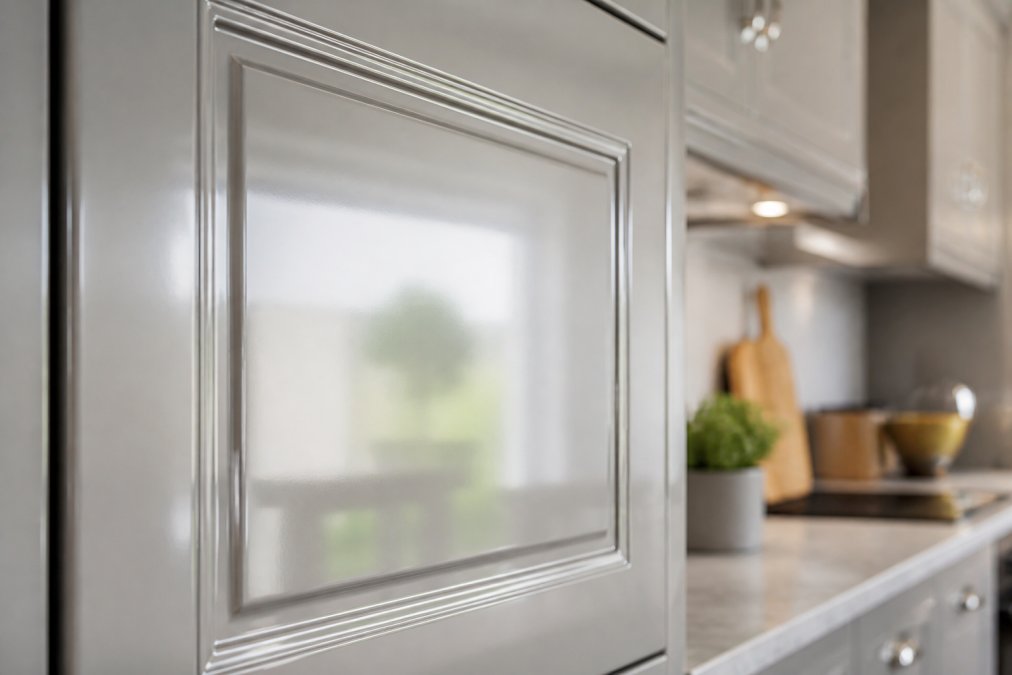
Most kitchen spray finishes fail not because the paint degrades, but because moisture penetrates the coating or adhesion breaks down under daily wear. Understanding what actually determines durability helps homeowners make informed decisions about whether professional spraying makes financial sense for their situation.
The three-step spraying process used by professional applicators, primer, base coat, and topcoat, isn’t just about aesthetics. Each layer serves a specific durability function. The primer bonds to the substrate, the base coat provides colour and coverage, and the topcoat protects against moisture and UV damage. Skipping any step or applying them too thin directly reduces lifespan.
Factors That Affect Kitchen Spray Finish Durability
Several interconnected variables determine how long your kitchen spray finish will remain intact and visually appealing. These aren’t minor considerations, each one can add or subtract years from the finish’s effective lifespan.
Surface Preparation Quality
The condition of the surface before spraying is the single most critical factor in finish longevity. Cabinets with old varnish, grease buildup, or uneven surfaces create adhesion problems that emerge within months, not years. Proper preparation involves thorough cleaning, sanding to bare wood or a sound substrate, and filling any gaps or damage.
When preparation is rushed, the new finish sits on top of a compromised surface. Moisture finds its way underneath. Paint begins to peel or blister. What should have been a decade-long finish becomes a three-year problem. Professional applicators spend as much time preparing as they do spraying, sometimes more, because they know this determines everything.
Dust contamination during application also matters more than many people realise. A single particle embedded in the wet spray can become a point where moisture enters and adhesion fails. Professional spray environments use containment measures specifically to prevent this. Home DIY attempts rarely account for dust settling mid-application, which explains why many amateur spray jobs deteriorate faster.
Coating Thickness and Application Method
Spray application allows for precise, even coating thickness, typically 75-125 microns per coat depending on the product. Brush or roller application cannot achieve this consistency, which is why spray-finished cabinets generally outlast hand-painted ones. The uniform thickness means no thin spots where the coating is vulnerable.
Application method also affects how well the coating bonds to the substrate. Spray creates a better mechanical bond through atomisation, whereas brushing can leave drag marks and uneven adhesion. This structural difference translates directly into durability, spray finishes resist moisture penetration more effectively because there are no brush stroke valleys where water can collect.
Multiple thin coats outperform a single thick coat. A professional three-coat system distributes the total film thickness across layers that cure properly, whereas one thick coat may not cure evenly throughout its depth. This layering approach is why professional kitchen spray finishes last longer than single-coat alternatives.
Kitchen Environment and Moisture Exposure
Kitchens present unique durability challenges because they combine heat, humidity, and moisture in ways few other rooms do. Steam from cooking, splashes from washing up, and ambient humidity all attack paint finishes. Cabinets directly above the hob or sink face accelerated degradation compared to those in drier zones.
Ventilation quality dramatically affects finish lifespan. A kitchen with effective extraction that removes steam quickly protects the finish far better than one where humidity lingers. Poor ventilation can reduce finish durability by 40-50% simply because moisture has more time to penetrate the coating and reach the substrate.
Temperature fluctuations also matter. Cabinets that experience significant seasonal temperature swings or daily heating cycles expand and contract, creating stress on the coating. This movement eventually causes cracking and peeling. Kitchens with stable temperatures maintain finishes better than those with dramatic variations.
Benefits of Professional Kitchen Cabinet Spraying
Professional spraying offers durability advantages that extend beyond the initial aesthetic appeal. The investment typically pays for itself through the extended lifespan of the finish and the superior appearance it maintains over time.
The primary benefit is consistency. Professional equipment delivers uniform coating thickness across every cabinet, every door, and every surface. This uniformity means no weak spots, no thin areas that fail early, and no variation in colour or sheen. Homeowners attempting spray finishing rarely achieve this level of consistency without significant experience.
Astral Coatings Ltd. employs a meticulous three-step spraying process that addresses both immediate appearance and long-term durability. This methodical approach takes longer than a quick spray job, but the finish lasts significantly longer as a result.
Professional applicators also protect your kitchen during the process. Proper masking prevents overspray on worktops, appliances, and flooring. This attention to detail means you don’t face the choice between accepting spray damage or paying for repairs. The surrounding environment remains protected throughout the work.
The real cost comparison isn’t between professional spraying and DIY. When you factor in the cost of respraying cabinets that failed prematurely, professional application often proves more economical over a longer period.
Maintenance Tips to Extend Your Spray Finish Lifespan
How you care for spray-finished cabinets after application determines whether they reach their full potential lifespan. Proper maintenance can extend a finish by several years, while neglect can cut it short.
Clean cabinets regularly with a soft, damp cloth and mild detergent. Avoid abrasive scrubbers or harsh chemicals that can damage the topcoat. Grease and food residue should be removed promptly because they can degrade the finish over time. This doesn’t require special products, warm soapy water works effectively.
Wipe up spills immediately, particularly around the hob and sink where moisture exposure is highest. Water sitting on the finish seeps into micro-cracks and compromises adhesion. Quick drying prevents this damage. Similarly, ensure good ventilation during and after cooking to reduce humidity exposure.
Avoid placing hot items directly on cabinet surfaces. Extreme heat can soften or damage the topcoat. Use trivets or protective mats for pans and hot cookware. This simple precaution prevents localised damage that can become entry points for moisture.
Inspect cabinets periodically for signs of wear. Small chips or cracks should be touched up promptly before moisture penetrates deeper. Most professional applicators can provide matching paint for minor repairs. Addressing damage early prevents it from spreading.
How to Clean Spray Painted Kitchen Cabinets
Cleaning spray-painted cabinets differs slightly from cleaning other surfaces because the finish is more delicate than solid wood and requires gentler care. Understanding proper cleaning technique protects your investment.
Use a microfibre cloth or soft cotton cloth rather than paper towels, which can be abrasive. Dampen the cloth with warm water and add a drop of mild washing-up liquid. Wring out excess water so the cloth is damp, not wet. Excess water sitting on the finish can cause damage.
Wipe cabinets in the direction of the grain (if applicable) or in gentle circular motions. This approach removes dust and light grime without creating visible swirl marks. For stubborn marks or grease buildup, slightly increase the concentration of washing-up liquid, but avoid strong degreasers or bleach-based cleaners that can strip the topcoat.
Dry cabinets immediately after cleaning with a separate dry cloth.
Never use scouring pads, wire brushes, or abrasive cleaners on spray-finished cabinets. These tools can scratch or dull the topcoat, creating visible damage and potential entry points for moisture. Even “gentle” abrasive pads can harm the finish.
Understanding Kitchen Cabinet Spraying Cost and Value
The cost of professional kitchen cabinet spraying varies based on the number of cabinets, complexity of the layout, and current condition of the surfaces. Rather than stating specific prices, which depend on individual project scope, the value proposition becomes clear when you compare the total cost of ownership over time.
Signs Your Kitchen Spray Finish Needs Refreshing
Even well-maintained spray finishes eventually show signs of wear. Recognising these indicators helps you plan for refresh work before the finish deteriorates significantly.
Frequently Asked Questions
How many years does a professional kitchen spray finish typically last?
Professional kitchen spray finishes generally last 7-10 years with proper maintenance. The lifespan depends on how well the surface was prepared before spraying, the quality of the coating applied, and how much moisture and wear your kitchen experiences. Homes with good ventilation and regular cleaning see finishes last towards the upper end of this range. Professional application ensures optimal coating thickness, which significantly extends durability compared to DIY attempts.
What factors have the biggest impact on how long kitchen spray finishes last?
Surface preparation is critical, any dust, grease, or uneven substrate leads to premature peeling. Kitchen moisture and steam exposure also matter greatly; poor ventilation accelerates deterioration. The spraying method itself affects durability; a meticulous multi-step process applies even coating thickness, whereas single-pass spraying often results in thin, vulnerable finishes. Finally, your maintenance routine, regular gentle cleaning and avoiding abrasive scrubbing, directly influences how long the finish remains intact and attractive.
Does professional spray painting last longer than hand painting kitchen cabinets?
Yes, professional spray application produces more durable finishes. Spray methods deliver consistent, even coating thickness across all surfaces, including hard-to-reach areas inside cabinet frames. Hand painting often leaves visible brushstrokes, uneven coverage, and thinner layers that chip more easily. Professional sprayers also use industrial-grade equipment and follow rigorous preparation protocols that hand painters typically skip, resulting in better adhesion and longer-lasting colour and protection.
How can I tell if my kitchen cabinets need respraying?
Watch for peeling, flaking, or chipping paint, especially around handles and high-touch areas. Dull or discoloured patches suggest the finish is wearing through. If cabinets feel sticky or tacky to the touch, the topcoat is breaking down. Visible brush marks or uneven sheen also indicate the finish is failing. If your spray finish is approaching 7-10 years old and showing any of these signs, respraying will restore both appearance and protection. A professional inspection can confirm whether refinishing is needed.