Last Updated: October 25, 2026
Quick Summary
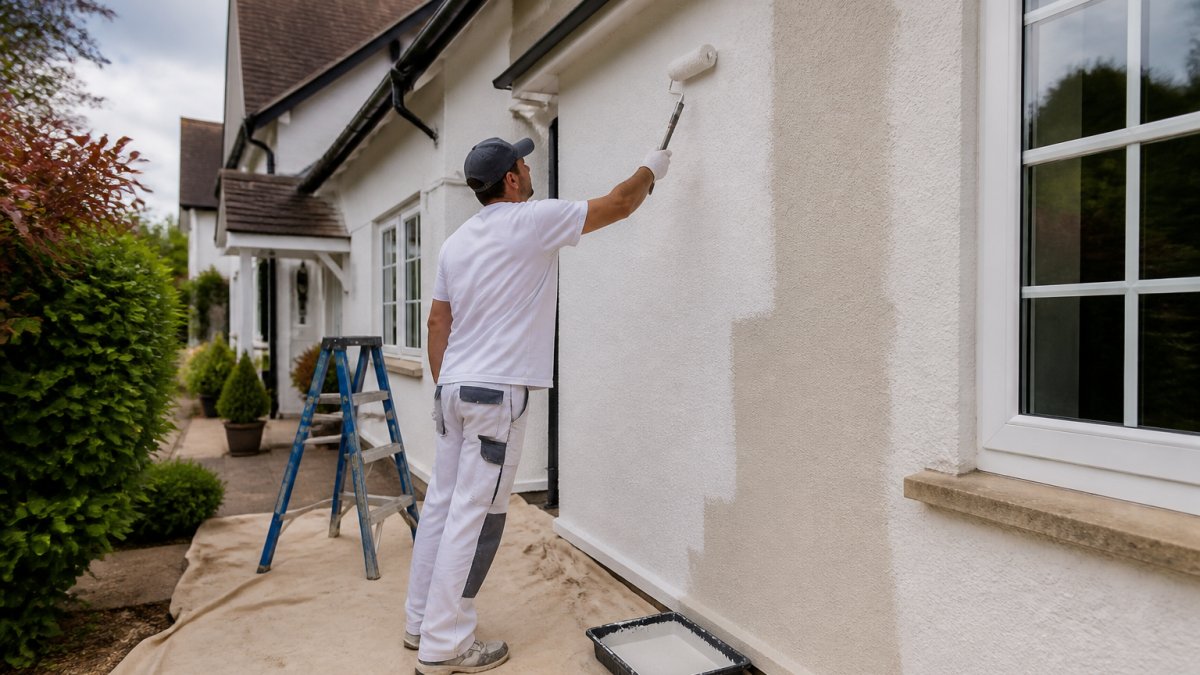
Exterior home painting is usually worth it because the coating fails, not the structure, so respraying costs far less than replacement and avoids weeks of disruption. Proper preparation, masking and even coating thickness decide how long the finish lasts.
- Preparation means cleaning, sanding, masking and priming, and it determines how long the finish lasts.
- Chalky uPVC frames have usually oxidised on the surface rather than degraded through.
- Conservatories fade faster than anything else because they present so much surface to the sun.
- Ask contractors how they prepare, what they mask and what happens if the finish fails.
- The cheapest quote is usually cheap because preparation has been cut, so the finish will peel.
Table of Contents
- Why Exterior Home Painting Beats Replacement More Often Than You’d Think
- Exterior Paint Preparation: The Stage That Decides How Long the Finish Lasts
- uPVC Window Spraying: Restoring Faded Frames Without Replacing Them
- uPVC Door Spraying for Front and Back Entrances
- Conservatory Spraying: Bringing a Faded Structure Back to Life
- What to Check Before You Book an Exterior Home Painting Contractor
- Request a Spray Finishing Quote for Your Property
- Frequently Asked Questions
Why Exterior Home Painting Beats Replacement More Often Than You’d Think
If your windows look tired, your conservatory has gone chalky white, or your front door has faded to a dull grey, the first instinct is usually to replace. That instinct is expensive. Exterior home painting is often the smarter call, and at Astral Coatings Ltd. we see the same pattern repeated across Sussex: structures that look beyond saving are usually just badly weathered on the surface.
The frame underneath is fine. The door is solid. The conservatory is watertight. What has failed is the coating, not the structure.
Replacement means removal, disposal, new materials and weeks of disruption. Respraying means preparation, masking and a fresh finish that bonds to what is already there. For most homes, the second option delivers a result that looks factory-fresh for a fraction of the upheaval. Below, we’ll show you exactly what separates a finish that lasts from one that peels within a season.
Exterior Paint Preparation: The Stage That Decides How Long the Finish Lasts
Exterior paint preparation is the cleaning, sanding, masking and priming work done before any coating is applied, and it determines almost everything about how the finish performs. Skip it and the best paint in the world will fail within months.
A common mistake is treating preparation as a quick wipe-down. It isn’t. On uPVC and previously painted surfaces, the coating needs a genuinely clean, slightly keyed surface to grip. Grease, algae, silicone residue and old flaking layers all cause adhesion failure, and adhesion failure is what peeling actually is.
Our three-step process exists for this reason. Every surface is cleaned and degreased, then masked so surrounding brickwork, glass and fittings stay untouched, then coated in controlled layers to reach an even thickness. Thin, patchy coats wear through fast. Correct thickness is what gives a finish its durability.
Cleaning, Sanding and Masking on Coastal and Inland Properties
Coastal properties face salt-laden air and driving rain, which leaves a fine film on frames that ordinary washing misses. Inland homes around Horsham and Crawley deal with more algae and green growth on north-facing surfaces. Both need a proper clean before anything else happens, but the products and dwell times differ.
Masking matters just as much on both. Windows, door furniture, brickwork and paving all need protection, and doing it properly is the difference between a crisp edge and a mess someone has to fix later.
uPVC Window Spraying: Restoring Faded Frames Without Replacing Them
uPVC window spraying is the process of cleaning, preparing and recoating faded or discoloured frames with a spray-applied finish that restores colour and protects the plastic underneath. It works on frames that have gone chalky, yellowed or patchy, and it costs far less than replacement.
Most homeowners assume a chalky frame means the uPVC itself has degraded. Usually it hasn’t. The surface has oxidised, and that oxidation sits on top of sound material. Once it’s removed and the frame is keyed, a fresh coating bonds properly and the frame looks new again.
Old, weathered frames are exactly the ones this suits best, provided the plastic is structurally sound. If a frame is cracked through or the sealed unit has failed, spraying won’t fix that, and we’ll say so. Where the frame is solid, our full uPVC exteriors service covers windows, doors and fascias in one visit. If you want the detail first, this step-by-step uPVC spraying guide walks through the whole process.
uPVC Door Spraying for Front and Back Entrances
Front doors take the worst of it. Sun on one side, rain on the other, constant handling around the handle and letterbox. Faded colour and a chalky surface are the usual results, and a new composite door is a serious expense.
uPVC door spraying refreshes the whole door, frame and surround in a single colour, with a finish that resists weather and cleaning. The preparation is the same discipline as windows: degrease, key, mask the hardware and threshold, then build the coating evenly. The result reads as a new door because the surface is uniform again, not because anything has been hidden.
Back doors and side entrances benefit just as much, and spraying them at the same time keeps the colour consistent across the property.
Conservatory Spraying: Bringing a Faded Structure Back to Life
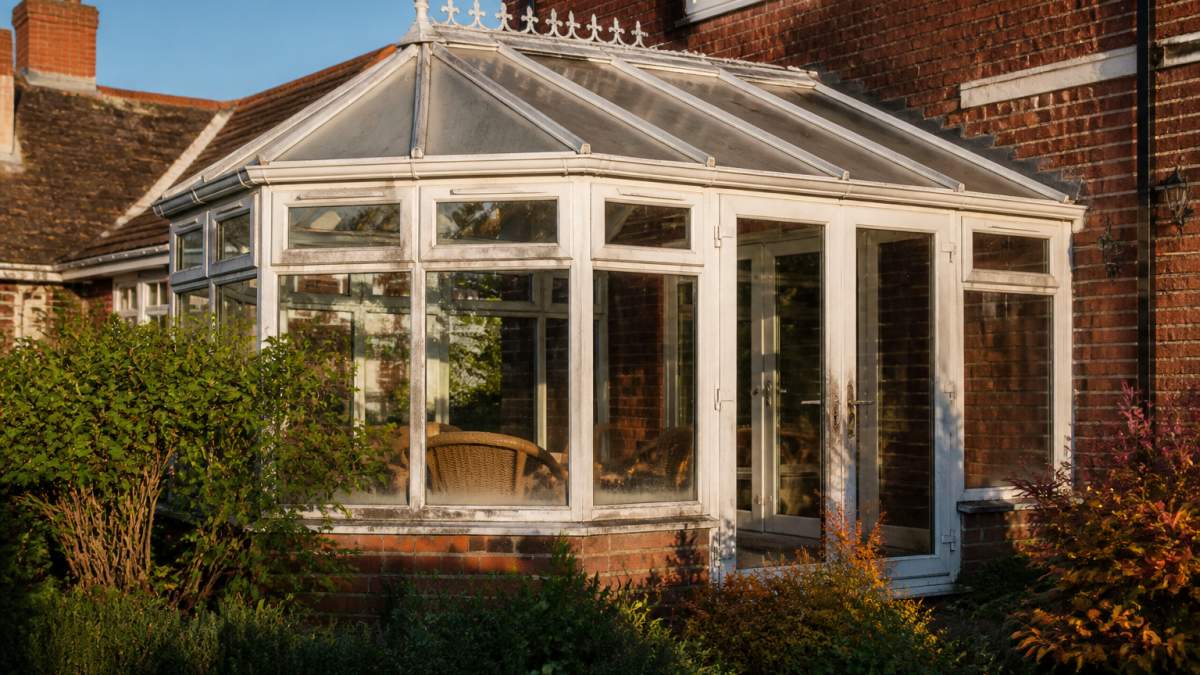
Conservatory spraying restores faded frames, trims and roof components to a consistent colour without dismantling anything. Conservatories fade faster than anything else on a house because they present so much surface to the sun.
The frames go chalky, the white turns cream, and the whole structure starts to look dated next to the rest of the house. Replacement is quoted in the thousands and means disruption for weeks. Spraying is done in place, with the glass and interior protected throughout.
The transformation is the most dramatic of any job we take on. A conservatory that looked ready for the skip comes back looking sharp and current, and the finish is weatherproof rather than merely decorative.
What to Check Before You Book an Exterior Home Painting Contractor
Before booking any exterior home painting contractor, check three things: how they prepare, what they mask, and what happens if the finish fails. Those three answers separate a professional job from a costly lesson.
Ask specifically about preparation. A contractor who talks only about paint and skips the cleaning and keying stage is planning to fail. Ask how they protect your brickwork, paving, glass and door furniture, because overspray damage is expensive to put right. And ask what the finish is guaranteed against.
Check insurance and reviews too. A legitimate contractor carries cover for accidental damage, and you should see evidence of it before work starts. Reviews mentioning tidiness and protection matter as much as ones praising the colour.
Watch out: the cheapest quote is usually cheap because preparation has been cut. That finish will peel, and you’ll pay twice.
Two things help you decide with confidence. You can visualise colour and finish options before committing. And our warranty and aftercare page sets out exactly what’s covered after the job, so you know where you stand.
| Check | What good looks like | Why it matters |
|---|---|---|
| Preparation | Cleaning, keying and masking explained | Adhesion and finish life |
| Protection | Brickwork, glass and paving covered | Avoids overspray damage |
| Insurance | Cover for accidental damage shown | Protects your property |
| Warranty | Clear written aftercare terms | Recourse if something fails |
| Reviews | Mentions of tidiness and care | Signals a disciplined process |
Request a Spray Finishing Quote for Your Property
The best way to know whether spraying will work on your windows, doors or conservatory is to have someone look at them. Photos usually tell us enough to give you a straight answer, including when replacement genuinely is the better route.
We’ve spent over 30 years on interior and exterior decorating, trained at the Dulux Academy and Llewellyns of Brighton, and we work across West Sussex and Brighton from our base in the county. You can read more about who we are before you get in touch.
Frequently Asked Questions
Is spray painting suitable for uPVC windows and doors?
Yes, when the frames are properly prepared. uPVC window spraying and uPVC door spraying work well on faded, weathered frames because the coating bonds to a cleaned and keyed surface rather than sitting on top of dirt or chalky residue. The key is exterior paint preparation: degreasing, light abrasion and full masking of glass, seals and hardware. Worn frames should be assessed first, since cracked welds or deep damage may still justify replacement rather than refinishing.
Can a conservatory be spray painted?
Conservatory spraying is a practical alternative to replacement when the frame is structurally sound but the colour has faded or yellowed. The process covers the frame, trims and roof bars with a durable finish, and masking protects the glass and seals throughout. Because conservatories have more surface area and glazing than a typical window set, expect the quote to reflect that. Ask the contractor to confirm the frame is sound before booking.
How do you prepare a house exterior for painting?
Exterior paint preparation typically involves washing the surface to remove dirt, algae and salt film, sanding or keying the substrate, filling minor defects, and masking anything that should not be coated. On coastal properties, salt residue needs particular attention. Skipping or rushing this stage is the most common reason a finish fails early, so ask any contractor how many preparation steps their process includes and what happens between them.
How long does exterior paint last?
How long a finish lasts depends on the substrate, the coating system and the weather exposure. A properly prepared and applied spray finish on uPVC or timber will typically outlast a DIY paint job, which often fails within a couple of years on weathered frames. Coastal conditions are harsher than inland ones, so re-coating intervals vary. Ask the contractor what coating they use and how it performs in exposed positions before you commit.
If your frames, doors or conservatory have faded and you’re weighing up replacement against restoration, send us a few photos on WhatsApp. We’ll tell you honestly whether spraying will bring them back, explain how our three-step process protects your surrounding surfaces, and confirm what our weatherproof finish involves for your property. Get started with Astral Coatings Ltd. and book a spray finishing quote for your home.
