Tag: upvc window spray painting cost

  • uPVC Window Restoration Services: A Complete Guide

    uPVC Window Restoration Services: A Complete Guide

    Table of Contents

    Last Updated: October 1, 2026

    What uPVC Window Restoration Involves

    uPVC window restoration is the process of refinishing weathered or discoloured plastic window frames, doors, and conservatory panels using professional spray coating techniques. Rather than replacing the entire frame, restoration breathes new life into existing structures by applying durable, factory-finish coatings that protect against the elements whilst transforming appearance.

    The restoration process addresses common problems homeowners face: faded frames that look tired, discolouration from years of exposure, and surfaces that no longer match updated interiors. At Astral Coatings Ltd., we specialise in transforming these worn fixtures into a renewed, high-quality look using meticulous application methods that ensure lasting results.

    What makes professional restoration different from a DIY paint job is precision. The coating must be applied at exactly the right thickness to provide weatherproof protection. Too thin, and durability suffers. Too thick, and the finish becomes uneven. This is where trained specialists make the difference.

    Why Windows Sprayed with Professional Coatings Matter

    Weathered uPVC frames aren’t just an aesthetic problem, they’re a durability issue. Unprotected plastic degrades under UV exposure, losing its colour and structural integrity over time. Professional coatings create a protective barrier that stops this degradation.

    A properly applied coating serves multiple purposes simultaneously. It shields against moisture penetration, resists UV fading, and provides a hard-wearing surface that withstands weather cycles. This multi-layer protection is why professionally sprayed windows are durable.

    The visual transformation matters too. A home with faded, yellowed window frames looks neglected, even if everything else is well-maintained. Refreshing these frames with a professional finish immediately improves kerb appeal and property perception. For homeowners in West Sussex considering property value, this matters significantly.

    Professional application also protects surrounding surfaces during the work. Masking, containment, and careful technique mean your kitchen worktops, appliances, and nearby furnishings remain untouched.

    Pro Tip
    The finish quality depends entirely on surface preparation. Dirty or damaged frames won’t accept coating properly, which is why professionals clean and assess surfaces thoroughly before spraying begins. This extra step is what separates lasting results from disappointing ones.

    Understanding uPVC Window Spray Painting Cost

    Cost for uPVC window restoration varies significantly based on surface area, frame condition, and project scope. A single window costs considerably less than a full conservatory, and weathered frames requiring extra preparation cost more than those in reasonable condition.

    Factors affecting pricing include the number of windows and doors being restored, whether the work is interior or exterior, and accessibility. A straightforward job, say, four bedroom windows in good condition, costs less than a complex project involving multiple conservatory panels, French doors, and weathered frames requiring intensive preparation.

    Rather than guessing at figures, homeowners should request a site visit and quotation. This allows specialists to assess actual conditions and provide accurate pricing based on what’s needed. Contact Astral Coatings Ltd. for a consultation to understand costs for your specific situation.

    One common misconception is that professional restoration costs nearly as much as replacement. For homeowners seeking value, restoration delivers significant savings whilst achieving a professional finish.

    Watch Out
    Beware of unusually low quotes. Bargain pricing often reflects corners being cut, inadequate surface preparation, thin coatings, or rushed application. These shortcuts lead to premature peeling or chipping, ultimately costing more when repairs become necessary.

    How Long Does uPVC Spray Painting Last

    Professionally applied coatings on uPVC typically maintain their appearance and protective qualities for many years. The lifespan depends on climate exposure, maintenance, and application quality. Frames in sheltered locations last longer than those facing constant weather exposure.

    Exterior frames experience more stress than interior ones, so durability expectations differ. A kitchen with protected interior uPVC doors can see a finish remain vibrant for extended periods, whilst a conservatory roof panel facing direct sun and rain requires more frequent maintenance.

    What most guides miss is that durability isn’t just about the coating, it’s about the preparation underneath. A professionally prepared surface with optimal coating thickness lasts significantly longer than a hastily applied finish. This is why Astral Coatings Ltd. emphasises meticulous preparation as part of our three-step process.

    Maintenance also affects longevity. Regular cleaning with appropriate products keeps the finish looking fresh and extends its protective life. Harsh chemicals or abrasive scrubbing can damage coatings prematurely, so gentle care matters.

    Restoration vs Replacement: Making the Right Choice

    The decision between restoration and replacement depends on frame condition, budget, and long-term goals. Restoration works best when frames are structurally sound but visually tired. If uPVC is cracked, severely warped, or failing to seal properly, replacement becomes necessary.

    Restoration suits homeowners who want immediate visual improvement without major disruption. The process takes days, not weeks. There’s minimal mess, no debris removal, and no need to relocate furniture or appliances. For someone working from home or managing a busy household, this advantage is substantial.

    Replacement suits situations where frames are genuinely failing, seals broken, glass units failing, structural damage present. In these cases, restoration won’t solve underlying problems. However, if your frames are simply discoloured or tired-looking, restoration delivers the transformation you want at a fraction of replacement cost.

    The common mistake is assuming old frames must be replaced. Many frames that appear worn are perfectly functional and structurally sound. They just need a professional refresh. This is where a specialist assessment proves invaluable.
    Contact us on WhatsApp →

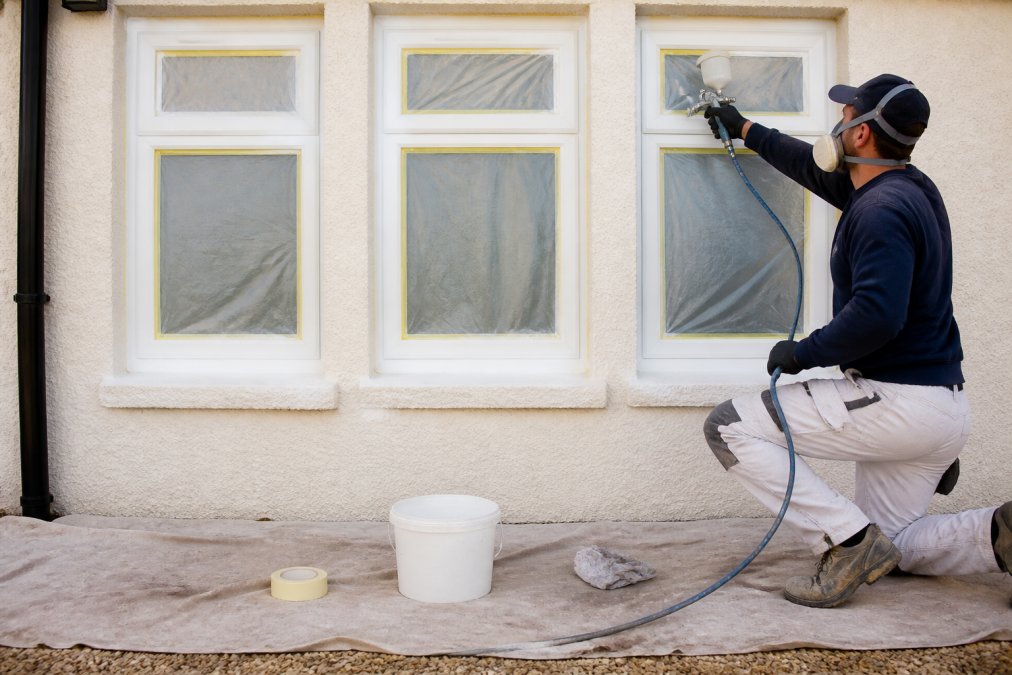
    Professional spray painter carefully applying protective coating to uPVC window frame using professional equipment with masking tape and drop cloths securing surrounding surfaces
    Professional spray painter carefully applying protective coating to uPVC window frame using professional equipment with masking tape and drop cloths securing surrounding surfaces

    The Three-Step Spraying Process Explained

    Professional uPVC window restoration follows a structured approach that ensures durability and finish quality. The three-step process separates professional results from amateur attempts.

    Step one: preparation and cleaning. Frames are thoroughly cleaned to remove dirt, algae, and contaminants that prevent proper coating adhesion. This isn’t a quick wipe-down, it’s a detailed cleaning that addresses every surface. Damaged areas are assessed, and any necessary repairs are completed before coating begins. Surrounding surfaces are masked to protect against overspray.

    Step two: primer application. A specialist primer is applied to create a foundation for the top coat. This primer ensures the coating bonds properly to the uPVC surface and provides additional protection. The primer layer is essential, skipping this step is why DIY attempts often fail.

    Step three: final coating application. The topcoat is applied using professional spray equipment, ensuring even coverage and optimal thickness. This is where the visible transformation happens. The finish must be uniform, free of runs or drips, and perfectly smooth. Multiple light passes deliver better results than one heavy application.

    What separates Astral Coatings Ltd.’s approach is attention to detail at each stage. We’ve trained at the Dulux Academy and Llewellyns of Brighton, which means we understand coating chemistry and application techniques at a professional level. This training translates to finishes that look factory-fresh and last.

    The entire process typically takes several days depending on project size. Drying time between coats is essential, rushing this stage compromises the final result.

    Key Takeaway
    The three-step process isn’t just about applying paint. It’s a system designed to ensure the coating bonds properly, cures completely, and delivers lasting protection. Each step matters equally, skip any one, and durability suffers.

    What to Expect During Your Restoration Project

    A professional restoration project follows a predictable timeline that minimises household disruption. Understanding what happens at each stage helps you prepare and manage expectations.

    Initial consultation and assessment. A specialist visits your property to evaluate frame condition, discuss colour options, and provide a quotation. This is when questions get answered and concerns addressed.

    Preparation phase. Before spraying begins, extensive masking protects your kitchen, appliances, worktops, and furnishings. Windows and doors are cleaned thoroughly, any repairs are completed, and the work area is secured. This phase typically takes a full day for larger projects.

    Spraying phase. The actual coating application happens over several days, with drying time between coats. You’ll notice the transformation as each coat is applied. Noise and dust are minimal with professional equipment and techniques.

    Curing and inspection. After the final coat, frames cure fully before masking is removed. A final inspection ensures the finish meets professional standards.

    Disruption is genuinely minimal compared to renovation work. You can continue using your home normally, though you’ll need to avoid touching freshly coated surfaces. Most homeowners find the process straightforward and the results worth any minor inconvenience.

    According to the Health and Safety Executive’s guidance on spray application, professional spray work requires proper ventilation and containment to protect both workers and occupants. Astral Coatings Ltd. follows these standards rigorously, ensuring safe working practices throughout every project.

    The real difference between professional restoration and DIY attempts becomes obvious once the work is complete. A professionally restored window looks factory-fresh, feels durable to the touch, and maintains that appearance. This is what trained expertise and proper technique deliver.


    Refreshing tired uPVC windows without the cost and disruption of replacement is genuinely possible, but only when the work is done properly.

    Restoration Stage What Happens Duration
    Consultation Frame assessment, colour selection, quotation 1 hour
    Preparation Cleaning, masking, surface repairs 1 day
    Primer coat First protective layer application 1 day + drying
    Final coating Top coat application for finish 1-2 days + curing
    Inspection Quality check and masking removal Half day

    Frequently Asked Questions

    Is it worth restoring old uPVC windows instead of replacing them?

    Restoration offers significant savings compared to full replacement whilst delivering a factory-fresh finish. If your frames are structurally sound but weathered or discoloured, professional spray coating restores them effectively. Replacement becomes necessary only when frames have severe damage, failed seals, or broken mechanisms. For most homeowners, restoration provides excellent value and extends window life considerably.

    How long does professional uPVC spray painting last on windows?

    High-quality professional spray coatings typically last many years, depending on exposure to weather and maintenance. The durability depends on proper surface preparation, coating thickness, and the quality of materials used. A meticulous three-step process ensures optimal coating thickness for maximum longevity. Regular cleaning helps extend the finish and maintains its appearance throughout its lifespan.

    What is the typical cost difference between restoring and replacing uPVC windows?

    Restoration costs significantly less than replacement. Exact pricing depends on window quantity, surface area, condition, and your location. For accurate costs tailored to your project, contact a professional service provider for a detailed quote. Most homeowners find restoration delivers exceptional value for refreshing their property’s appearance.

    Can professional restoration work on severely weathered or discoloured frames?

    Yes, professional restoration effectively addresses weathering, discolouration, and fading. The process includes thorough preparation to remove oxidation and surface damage before applying new coatings. Even significantly aged frames can be restored to a renewed, high-quality appearance. However, if frames have structural damage, broken seals, or mechanical failures, replacement may be more appropriate.
  • Residential Spray Finishing Services: A Guide

    Residential Spray Finishing Services: A Guide

    Table of Contents

    Last Updated: September 28, 2026

    What Residential Spray Finishing Offers

    Residential spray finishing services apply professional-grade coatings to interior and exterior surfaces using precision spray equipment, delivering a smooth, durable finish without the cost of full replacement or renovation. This approach transforms worn kitchens, faded uPVC windows, doors, and conservatories into refreshed spaces that look factory-fresh. Astral Coatings Ltd. helps homeowners achieve high-quality results by spraying existing fixtures instead of replacing them entirely.

    The core appeal lies in the durability and aesthetic quality. Spray-applied coatings bond uniformly across surfaces, creating a finish that hand painting simply cannot match. Unlike brush or roller application, spray finishing eliminates brush marks, drips, and uneven coverage. The process also allows for optimal coating thickness, which directly impacts how long the finish will withstand daily wear, weathering, and UV exposure.

    What makes residential spray finishing particularly valuable is the speed and minimal disruption. A kitchen cabinet refresh that might take weeks with traditional painting can be completed in days with spray finishing. The finish dries faster, cures quicker, and homeowners can return to normal use sooner. For busy households or those working from home, this matters significantly.

    Pro Tip
    The durability difference is measurable. Properly sprayed finishes on kitchen cabinets can outlast hand-painted ones because the coating thickness is consistent and the adhesion is superior. This is why professional spray finishing delivers results that justify the investment.

    Kitchen Cabinet Spray Finishing Benefits

    Kitchen cabinets are the most visible target for spray finishing, and the benefits here are substantial. A sprayed cabinet finish provides a factory-quality appearance that transforms the entire kitchen aesthetic without the disruption, cost, or waste of a full cabinet replacement. Homeowners often hesitate between refreshing existing cabinets or buying new ones, and spray finishing makes the former genuinely competitive.

    The finish quality is the primary advantage. Spray application creates a smooth, glass-like surface free of brush marks or texture variation. This uniformity catches light evenly, making the kitchen feel more polished and contemporary. The visual difference between a hand-painted cabinet and a professionally sprayed one can be significant, with the sprayed finish often looking more refined.

    Durability in the kitchen environment is critical. Cabinets face heat from cooking, moisture from washing up, and constant handling. A properly applied spray finish resists chipping, peeling, and wear better than hand-applied coatings. The kitchen cabinet spray finishing benefits extend to colour stability as well; professional coatings can resist yellowing and fading.

    Cost efficiency is another genuine benefit. Replacing a full kitchen can be a significant investment. Spray finishing the existing cabinets costs a fraction of that while delivering a genuinely renewed look. For homeowners wanting to refresh their space without a major renovation budget, this is often a decisive factor.

    uPVC Window Spray Painting Cost and Value

    uPVC windows, doors, and conservatories are excellent candidates for spray finishing, particularly when they’ve faded, yellowed, or developed that tired, weathered appearance that characterises older installations. The uPVC window spray painting cost comparison is straightforward: replacement can be a significant investment per window or door, whilst spray finishing costs substantially less whilst delivering a restored appearance.

    The value proposition centres on restoring factory-fresh aesthetics without replacement. uPVC can chalk, discolour, and lose its crisp appearance over time depending on sun exposure and maintenance. Replacement means removing frames, disposing of old units, and disrupting the property. Spray finishing simply applies a protective, colour-matched coating that restores the original look.

    Weather resistance is a key consideration. Professional spray coatings protect uPVC from further UV degradation and weathering. This protective layer extends the functional life of the frames themselves, not just their appearance. A sprayed uPVC window will resist fading and chalking better than an uncoated, aged frame.

    The process works on frames that are structurally sound but visually worn. If the seals are failing, the glass is damaged, or the frames are warped, replacement is necessary. But if the issue is purely cosmetic, fading, discolouration, or a dated appearance, spray finishing restores the property without the expense and disruption of replacement. This distinction matters because many homeowners assume their windows need replacing when they simply need refinishing.

    Watch Out
    Weathered frames with surface cracks or significant damage may not be suitable for spray finishing alone. The coating will not repair structural issues, it restores appearance on sound frames. Have the frames assessed before committing to the work.

    Professional Spray Painting vs Hand Painting

    The differences between professional spray finishing and hand painting are substantial enough to justify choosing one over the other based on the specific project. Both methods apply paint, but the results, durability, and finish quality diverge significantly.

    Hand painting offers control and precision on small, detailed areas. Trim work, edges, and intricate mouldings are often easier to hand paint without overspray. Hand painting also works well on surfaces that are difficult to mask or protect. However, hand painting is inherently slower, more labour-intensive, and prone to visible brush marks, uneven coverage, and variations in finish thickness.

    Professional spray painting delivers uniform coverage, superior finish quality, and faster application. Spray equipment atomises the coating into fine particles, creating a smooth, even layer without brush marks or texture. The coating thickness is consistent across the entire surface, which directly translates to better durability and longevity. Spray finishing is also faster, large surfaces like kitchen cabinets or conservatory frames are completed in a fraction of the time hand painting would require.

    The durability difference can be measurable. Hand-painted finishes may show wear within a few years in high-use areas like kitchens. Professionally sprayed finishes, when properly applied, can last longer. The superior adhesion and uniform thickness of spray application account for this difference.

    Contact us on WhatsApp →

    Cost-wise, spray finishing can have higher upfront material and equipment costs, but the speed of application often makes the total labour cost competitive with hand painting, particularly on larger projects. For kitchen cabinets, conservatories, or multiple uPVC frames, spray finishing can deliver better value over the lifetime of the finish.

    Key Takeaway
    Choose spray finishing for large, visible surfaces where finish quality and durability matter. Choose hand painting for small detailed areas, tight spaces, or projects where overspray risk is high. Most residential projects benefit from a combination, spray for the main surfaces, hand finishing for edges and details.

    The Three-Step Spray Finishing Process

    Professional spray finishing follows a disciplined three-step process that distinguishes high-quality work from rushed or amateur efforts. Understanding these steps explains why professional spray finishing costs more than basic painting and why the results justify the investment.

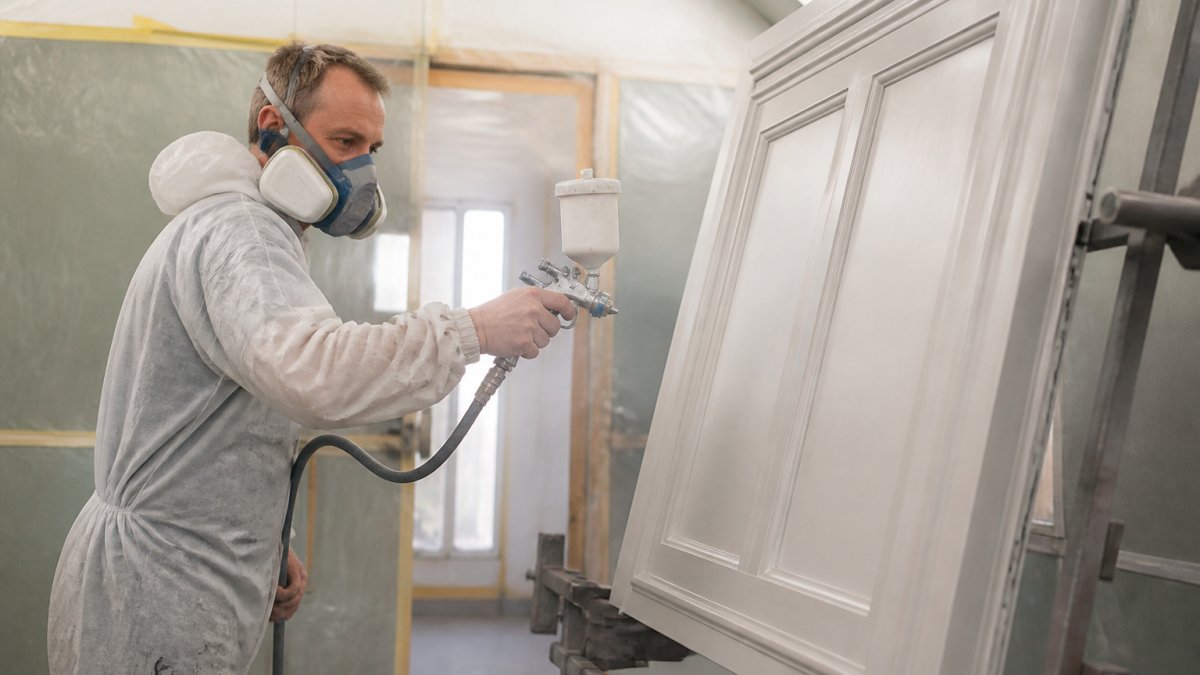
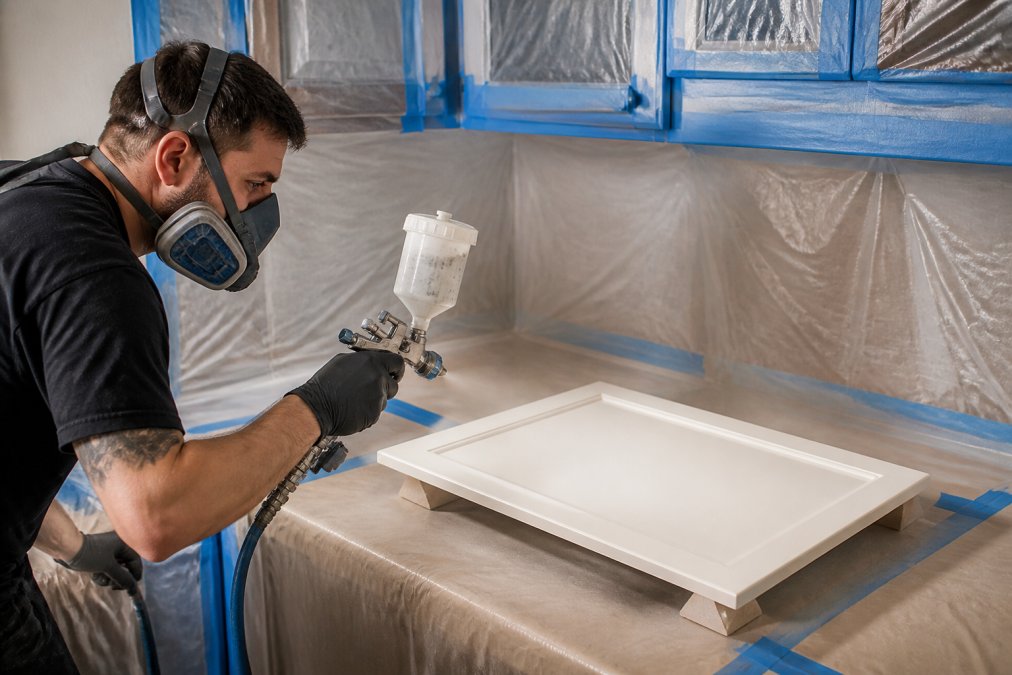
    Professional spray painter wearing protective respirator and safety gear applying coating to kitchen cabinet door using precision spray equipment, with blue masking tape and protective sheeting visible on surrounding surfaces
    Professional spray painter wearing protective respirator and safety gear applying coating to kitchen cabinet door using precision spray equipment, with blue masking tape and protective sheeting visible on surrounding surfaces

    Step One: Surface Preparation and Masking. The foundation of any quality spray finish is meticulous preparation. Surfaces are cleaned, sanded, and degreased to ensure the coating adheres properly. Existing finishes are assessed, some may be lightly sanded to improve adhesion, whilst others require stripping. All surrounding areas are masked with protective coverings to prevent overspray. This step is labour-intensive but absolutely critical. Shortcuts here result in poor adhesion, peeling, and premature failure.

    Step Two: Primer and Base Coats. Once surfaces are prepared, a primer is applied to promote adhesion and provide a uniform base. The primer ensures the final colour coat covers evenly and bonds securely. After the primer cures, the first colour coat is applied. Professional spray application uses multiple thin coats rather than one thick coat, this approach ensures even coverage, better adhesion, and superior durability.

    Step Three: Final Coat and Curing. The final colour coat is applied once the base coat has cured sufficiently. This coat delivers the finished appearance and colour. After application, the work is left to cure fully, this timeframe varies depending on the coating type and environmental conditions, but typically ranges from 24 to 72 hours before normal use can resume.

    The three-step process is what separates professional results from amateur work. Each step builds on the previous one, and skipping or rushing any step compromises the final result. This is why professional spray finishing services command a premium compared to basic painting, the process is thorough, time-consuming, and the quality difference is visible.

    Minimising Disruption During Application

    Household disruption is a legitimate concern for homeowners, particularly those working from home or with young children. Professional spray finishing is designed to minimise disruption, but understanding what to expect helps households plan accordingly.

    Spray equipment generates noise, though modern equipment is quieter than older models. The noise level is comparable to a vacuum cleaner, noticeable but not deafening. Most work occurs during normal business hours, and the duration is measured in hours or a few days rather than weeks.

    Dust and overspray are the primary disruption concerns.

    How to Get a Quote for Your Project

    Getting an accurate quote for residential spray finishing requires providing clear information about the scope of work, the surfaces involved, and the desired outcome. The process is straightforward, but the detail you provide directly impacts the accuracy of the estimate.

    Best For
    Homeowners in West Sussex and the surrounding area wanting to refresh kitchen aesthetics, restore faded uPVC windows and conservatories, or modernise dated interior fixtures without the cost and disruption of full renovation or replacement.

    Frequently Asked Questions

    How long does a professional spray finish last on kitchen cabinets and exterior surfaces?

    A properly applied professional spray finish can last for several years on interior surfaces like kitchen cabinets when maintained correctly. Exterior finishes on uPVC and conservatories can also last for several years depending on weather exposure and maintenance. The durability depends on surface preparation, coating quality, and the three-step application process used by professionals to ensure optimal coating thickness.

    What makes professional spray finishing better than DIY or hand painting?

    Professional spray finishing delivers uniform coverage, superior finish quality, and faster application compared to hand painting. Professionals control spray patterns, coating thickness, and drying conditions to prevent drips, runs, and uneven colour. They also protect surrounding surfaces systematically, minimising damage risk to worktops and appliances, something difficult to guarantee with DIY methods.

    Can spray finishing work on old, weathered uPVC windows and doors?

    Yes, weathered uPVC can be spray finished successfully if properly prepared. The surface must be cleaned, sanded, and primed to ensure adhesion. Professional assessment is essential because severely damaged frames may require replacement instead. Professionals evaluate each frame’s condition and recommend the best solution before starting work.

    How much disruption should I expect during residential spray finishing?

    Spray finishing causes minimal disruption compared to full renovation. Most interior projects take a few days depending on surface area. Dust and odour are controlled through masking and ventilation. You can typically remain in the property, though the sprayed area should be avoided during application and drying. Professionals manage the timeline to minimise inconvenience, particularly for those working from home.