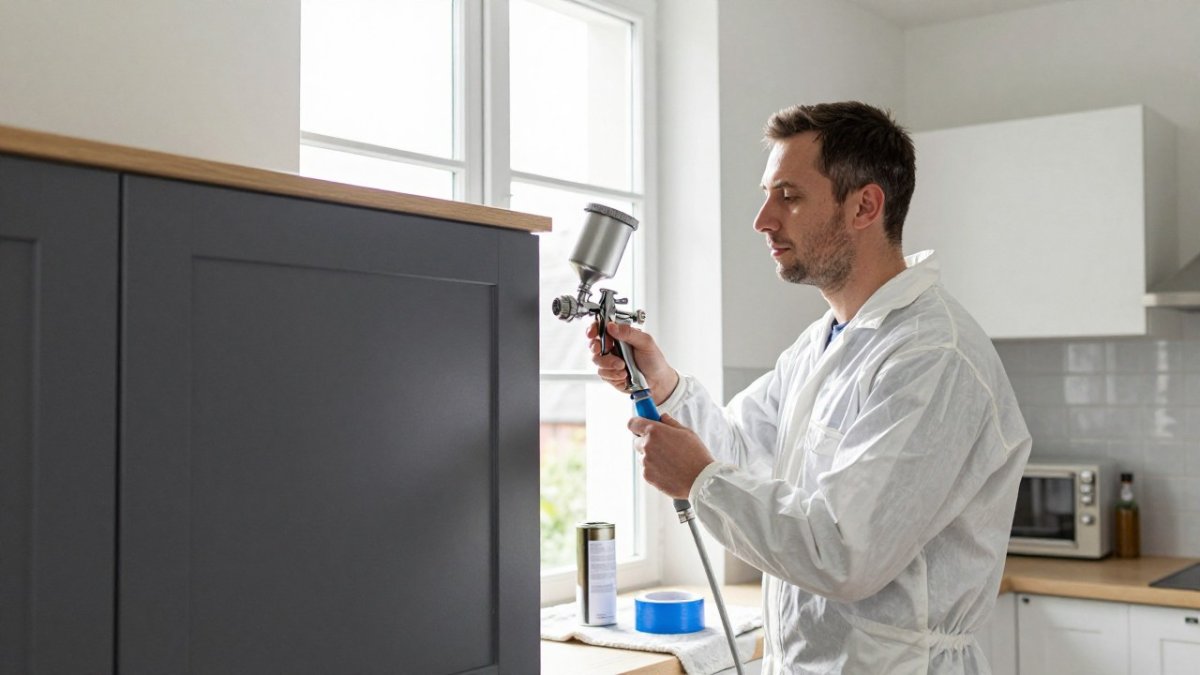
Quick Summary
Kitchen cabinet spraying is worth the investment when your cabinet frames and doors are structurally sound and you want a fresh look without a full refit. It is usually a poor choice if the units are warped, damaged or fitted to a layout you no longer want. The condition of your existing cabinets decides most of the answer.
- Check that cabinet boxes and doors are solid, square and free from swelling or water damage.
- Spraying suits sound cabinets with a layout you want to keep; it does not change the layout.
- Compare respray and replacement quotes line by line, checking what preparation and protection each includes.
- A well-prepared, professionally sprayed finish can last for years with careful cleaning.
- Ask any provider to test adhesion on your existing surface before committing to the full job.
Table of Contents
- Is Kitchen Cabinet Spraying Worth the Investment for Your Kitchen?
- The Condition of Your Existing Cabinets Decides Most of the Answer
- Kitchen Respray vs Replacement: Comparing Cost, Disruption and Value
- How Long Does Kitchen Cabinet Spraying Last in Practice?
- The Kitchen Cabinet Spraying Process, Step by Step
- Kitchen Cabinet Spray Painting Pros and Cons
- Booking Your Kitchen Cabinet Spraying Quote With Astral Coatings
- Frequently Asked Questions
5 Things to Weigh Before Spraying Your Kitchen Cabinets
Last Updated: November 14, 2026
Is Kitchen Cabinet Spraying Worth the Investment for Your Kitchen?
Kitchen cabinet spraying is worth the investment when your cabinet frames and doors are structurally sound and you want a refreshed look without a full refit. It is usually a poor choice when the units are damaged, badly warped or fitted to a layout you no longer want. The answer almost always depends on the condition of what is already there.
Many homeowners find that the cabinets are sound but the colour, finish or hardware has simply dated. In those cases, a professional spray finish can change how the whole room looks. Other owners discover that the real problem is the layout, the worktops or the appliances, and no amount of paint will solve that. Knowing which situation you are in is the first step.
The rest of this article covers the factors that matter most: the condition of your cabinets, how the cost compares with replacement, how long a finish lasts, what the process involves, and the trade-offs to weigh before you book. If you want to see how a modernisation project is carried out from start to finish, our step-by-step guide to modernising dated kitchen units walks through each stage.
The Condition of Your Existing Cabinets Decides Most of the Answer
The most important factor is whether your cabinets can take a new finish at all. Solid, straight doors with intact frames and a surface that has simply worn or yellowed are strong candidates. Doors that are warped, delaminating, water-damaged or held together with failing joints are not, because a new coating cannot fix the underlying structure.
A common mistake is judging only by appearance. Chipped edges and scuffs are usually fixable with proper preparation. Swelling, lifting veneer or soft particleboard are not. Check the carcasses as well as the doors, particularly around the sink and dishwasher where moisture does the most damage.
Surface type matters too. Existing finishes such as laminate, thermofoil and heavily varnished wood need thorough cleaning and abrading before a new coat will bond. A competent provider will test adhesion before committing to the full job, and that test is worth asking about in any quote.
Use the checklist below to assess your own kitchen before requesting quotes. It is not a substitute for an on-site survey, but it will tell you whether spraying is worth pursuing and what to ask about.
Construction and carcass
- Are the cabinet boxes solid and square, with no soft or swollen board around the sink, dishwasher or hob?
- Do the doors sit flat and close evenly, or are they twisted, dropped or rubbing?
- Are the hinges and drawer runners sound, or are they loose, corroded or failing?
- Is the internal shelving and storage adequate for how you use the kitchen?
Surface and damage
- Is the existing finish intact, or is it peeling, blistering, cracking or lifting at the edges?
- Is the surface laminate, thermofoil, veneer, solid timber or painted, and has it been tested for adhesion?
- Are there chips, dents or scratches that can be filled, or deeper damage that suggests the substrate is failing?
- Is there any sign of water ingress, mould or swelling that would need repair before spraying?
Layout and function
- Does the current layout work for you, or do you want to move appliances, add storage or change the worktop?
- Are the worktops and appliances in good condition, or would they need replacing anyway?
- Would a new colour and finish be enough, or is the real problem the shape and function of the room?
Hardware and details
- Are handles and hinges standard sizes that can be replaced or reused?
- Are there glazed, panelled or profiled doors that take longer to prepare and spray?
- Is there enough clearance around doors and drawers for a new coating without rubbing?
If most answers point to sound construction, intact surfaces and a layout you want to keep, spraying is likely to be worth the investment. If several point to structural damage, failing hardware or a layout you want to change, replacement or partial replacement is the more sensible route. A provider should be willing to walk through this checklist with you and explain which items would change their quote.
Watch out: a cabinet that looks sound from the front can have soft or swollen board behind the hinges or under the sink, so check inside and around fittings as well as the visible faces.
Kitchen Respray vs Replacement: Comparing Cost, Disruption and Value
Spraying is generally the lower-cost and lower-disruption option, provided the cabinets are in good condition. A respray avoids the removal of worktops, plumbing and appliances that replacement involves. For many households, keeping the existing layout is the main attraction.
Replacement makes more sense when you want to change the layout, move appliances, improve storage or fix structural problems. It also gives you the chance to upgrade the carcasses and internal fittings, which a respray does not touch.
The cost comparison should be like for like, and that is where most quotes mislead. A respray quote and a replacement quote rarely cover the same work, so compare them line by line rather than by headline figure.
Pricing depends on the number of doors, drawers and panels, their size and their condition, the surface type and how much repair is needed.
Disruption is part of the value calculation. A respray keeps the sink, hob, worktops and appliances in place, so the kitchen usually remains usable, although doors are off during spraying and drying. A replacement involves stripping out units, temporary loss of the kitchen and the knock-on cost of making good walls, floors and services.
Respray is also a cheaper way to test whether a new colour suits your space before committing to a whole new kitchen. If the layout and carcasses are sound, the saving comes from keeping what already works and spending only on the visible surface. If the layout is the problem, no finish will fix it, and replacement is the honest answer.
Watch out: a low respray quote that excludes repairs, priming or protection can end up costing more than a mid-range quote that includes them, so compare scope before price.
The two routes differ in cost, disruption and what they actually change, as set out below. You can also preview how a sprayed kitchen would look before deciding between the two.
| Factor | Kitchen respray | Replacement |
|---|---|---|
| Best when | Cabinets are sound and layout works | Layout or structure needs changing |
| Disruption | Doors off during spraying and drying | Units stripped out, making good needed |
| Changes layout | No | Yes |
| Upgrades carcasses | No | Yes |
| Quote comparison | Compare scope line by line | Compare scope line by line |
| Test a new colour | Yes, cheaper way to test | Not a test option |
How Long Does Kitchen Cabinet Spraying Last in Practice?
A professionally sprayed finish on well-prepared cabinets can last for years with normal use. Durability depends on three things: how thoroughly the surface was prepared, how many coats were applied and how the kitchen is cared for afterwards.
Cabinets in busy households, particularly around the hob and sink, will show wear sooner than those in quieter areas. To see what warranty and aftercare cover once the finish is complete, check the details before you book. Wiping spills promptly and using mild cleaners rather than abrasive products will extend the life of the finish.
Be wary of any claim that a finish will never need attention. The honest position is that good preparation and sensible cleaning make a large difference, and that the finish will age like any other surface over time.
The Kitchen Cabinet Spraying Process, Step by Step
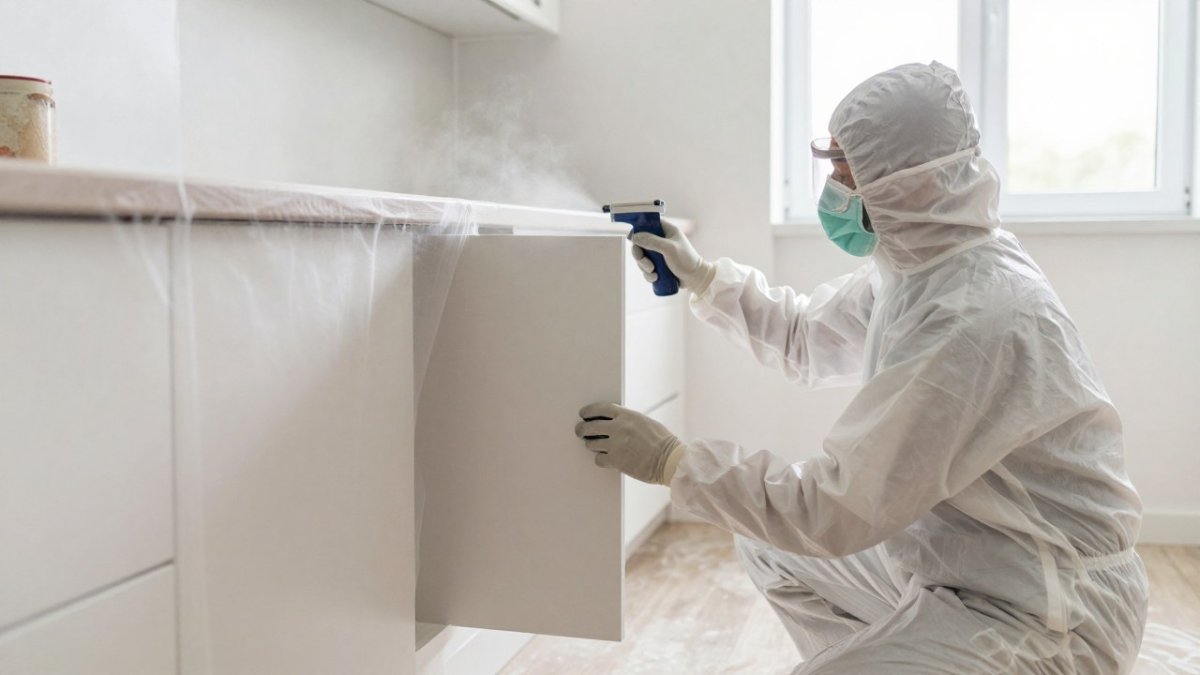
Throughout the job, surrounding surfaces such as worktops, walls and appliances should be protected with sheeting and masking. Ask your provider how they plan to protect these areas and how dust will be controlled, particularly if you work from home.
Kitchen Cabinet Spray Painting Pros and Cons
Pros:
- Refreshes the look of a kitchen without the cost and disruption of a full refit
- Produces a smooth, even finish that can outlast a hand-painted job
- Keeps the existing layout, worktops and appliances in place
- Usually completed in days rather than weeks
- Offers a way to test a new colour scheme before committing further
Cons:
- Only suitable where the cabinet frames and doors are structurally sound
- Does not change the layout, storage arrangement or internal fittings
- Preparation takes time, and dust control needs to be managed
- Quality depends heavily on the skill of the provider and the thoroughness of preparation
- Finishes still need careful cleaning and will age over time
Best for: homeowners with solid cabinets who want a new look and wish to keep the current layout.
Skip if: your units are damaged, warped or delaminating, or you plan to change the layout or appliances.
Booking Your Kitchen Cabinet Spraying Quote With Astral Coatings
If your cabinets are sound and the layout works for you, a quote is the sensible next step. Astral Coatings Ltd. has more than 30 years of experience in interior and exterior decorating and is based in West Sussex. The team trained at the Dulux Academy and at Llewellyns of Brighton, and follows a meticulous three-step spraying process.
Before you book, ask for a written quote that sets out the scope, the preparation included, the number of coats and how hardware and protection are handled. Our team can talk through whether your cabinets are a good candidates. Contact us on WhatsApp to arrange a quote and get a clear answer on whether spraying suits your kitchen.
Frequently Asked Questions
Is kitchen cabinet spraying worth the investment?
It is usually worth it when the cabinet boxes are sound, the layout still suits you and you want a noticeably new look without the cost and disruption of a full refit. It is less worthwhile when the units are water-damaged, warped or badly laid out, because a fresh finish will not fix those problems. Ask for a written quote that lists the surface preparation, the number of coats and whether doors, drawer fronts and plinths are included, so you can compare it fairly with replacement. Astral Coatings Ltd. can assess your cabinets and give you a clear quote.
How long does kitchen cabinet spraying last?
A properly prepared and sprayed finish can last for many years in a kitchen, but durability depends mainly on surface preparation, the product used and how the kitchen is cared for. Peeling and chipping usually come from inadequate cleaning, sanding and priming rather than from the spray itself. Wipe handles and high-contact areas with a damp cloth rather than harsh cleaners, and avoid steam and standing water near the doors. Ask your decorator what preparation and coating system they use before you agree to the work.
Is it cheaper to spray kitchen cabinets or replace them?
Spraying is generally less expensive than replacing a full kitchen, but the gap depends on the size of the kitchen, the condition of the units and whether you also need new doors, worktops or appliances. Comparing quotes is the only reliable way to judge this for your own kitchen, so request a written breakdown from each supplier covering the same scope. Make sure any quote states whether it includes removing hardware, protecting worktops and appliances, and any finishing or touch-up work after the spray.
What are the disadvantages of spraying kitchen cabinets?
The main drawbacks are that spraying cannot repair structural damage, it will not change the layout, and a poorly prepared surface will fail early. The work also needs the kitchen to be out of use for a period while the doors are removed, sprayed and cured, so plan for some disruption. Finally, a fresh finish on tired or unsuitable units may not feel like the investment you expected, which is why an honest assessment of condition before you commit matters.
